
Luxury Wine Travel: Why Great Hotel Wine Programs Matters
Wine as a Passport through the cellars, sommeliers, service, design and sense of place that turn a hotel stay into a destination experience. By Jamie Knee
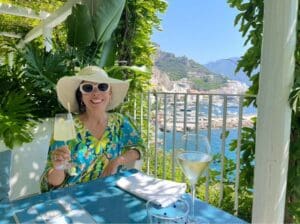
Luxury wine travel, at least the way I see it, does not begin and end at the vineyard gate. It may begin there, but the story follows the bottle into the places where we travel, from grand hotels and intimate resorts to beautiful restaurants, private cellars, seaside terraces and candlelit rooms where wine becomes part of the experience of being somewhere.
I have always loved a little glamour, not because luxury needs an audience and certainly not because it is about proving anything to anyone. I love it in the quiet, personal way. Even at home, when no one is there to impress, I still set the table, use the linen napkins, pour wine into a proper glass, light the candles and make dinner feel like a small occasion. It is simply part of who I am, and it makes me happy.
I have always been drawn to the pageantry of a beautiful room, the polished confidence of a well set table, the flicker of candlelight on crystal and the feeling that someone has thought carefully about how an evening should unfold. My favorite films are often from the 1940s and 1950s, when people dressed for dinner and even a simple drink seemed to arrive with a little ceremony. That sensibility has never left me, and I think wine belongs beautifully in that world.
Of course, wine does not require formality. Some of the most memorable glasses of my life have been enjoyed in vineyard dust, in a winemaker’s kitchen, on a boat, beside the sea or standing at a crowded bar with something salty and delicious to eat. But I will never turn down a gorgeous glass of wine in a gorgeous setting, especially when the setting deepens the experience rather than merely decorating it.
That sensibility has also shaped the way I work as a luxury wine travel writer. I am interested not only in vineyards and winemakers, but in what happens when wine meets hospitality. The cellar matters, but so do the sommelier, the glassware, the menu, the architecture, the view, the pacing of dinner and the way a wine program helps a guest understand where they are. To me, all of this belongs within the story of luxury wine travel.
Luxury Wine Travel Petite Wine Traveler
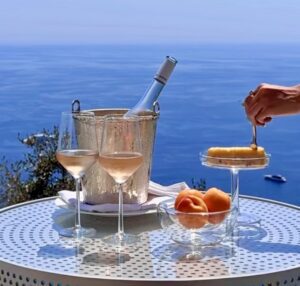
Wine As A Passport, Private Salon at Sea, by Jamie Knee, Wine Travel Presenter.
Wine as a Passport Beyond the Vineyard
Wine as a Passport has always been about seeing a destination through the glass. Sometimes that means walking a vineyard and understanding its soil, and sometimes it means sitting across from the family that has farmed it for generations. It can also mean arriving at a hotel where wine has been woven so completely into the experience that the property itself becomes part of the wine journey.
This is why my wine travel writing extends beyond wineries and traditional wine regions. I am equally fascinated by the places where wine is served, collected, interpreted and enjoyed, because a bottle may begin with terroir, but our memory of it is often shaped by everything that surrounds the glass.
The world’s most compelling hotel wine programs understand this beautifully.
Beneath Hôtel de Paris Monte Carlo, the historic cellars of Monte Carlo Société des Bains de Mer hold approximately 350,000 bottles and 4,500 wine references across 1,500 square metres. The cellars date to 1874 and supply wines throughout the resort’s restaurants and establishments.
The numbers are extraordinary, but what interests me more is what the cellar represents. Wine is not treated as an accessory to the Monte Carlo experience. It is part of its history, its sense of occasion and its particular expression of European glamour. The cellar has become part of the mythology of the property itself.
In Vienna, Palais Coburg offers another interpretation. Beneath the palace are six historic wine cellars containing more than 60,000 bottles and more than 5,000 different wines, with vintages spanning four centuries. Here, wine becomes almost archival. A guest is not simply choosing a bottle with dinner, but entering a world devoted to provenance, ageing, preservation and history, where architecture and wine culture become part of the same experience.
At Park Hotel Vitznau on Lake Lucerne, the cellar feels almost sculptural. Its collection is displayed across six distinct cellars, with approximately 4,500 wine positions organized through spaces devoted to France, Champagne, the Old World, the New World, Château d’Yquem and rarities. Surrounded by the lake and the Swiss Alps, the wine experience feels inseparable from the property itself, with the bottles, design, landscape and sense of precision all speaking the same language.
That is when a hotel wine program becomes something more than a wine list. It becomes part of the identity of the place.
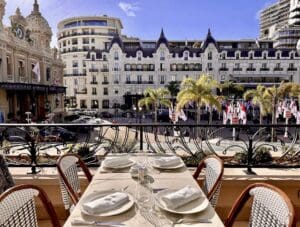
Wine Travel Monte Carlo with Jamie Knee
When Wine Becomes Part of the Destination
Perhaps one of the loveliest examples can be found in Champagne itself. At Royal Champagne Hotel & Spa, the vineyards of the Marne Valley spread below the property and Champagne is allowed to become part of nearly every layer of the stay.
There are private tastings with the sommelier team, Champagne experiences built around the region, pairings, cellar visits and opportunities to explore both famous houses and smaller growers. Even room service understands the appeal of a little theatre. Guests can press the hotel’s famous “Champagne Please!” button and summon a selection of cuvées to their room.
It is playful, of course, but it also understands something essential about luxury hospitality. Guests remember the details that make them smile, particularly when those details belong unmistakably to the destination. You are not merely drinking Champagne. You are in Champagne, looking across its vineyards, surrounded by its culture, and the hotel has found a way to keep reminding you of that.
This is Wine as a Passport.
Closer to home, in Santa Barbara
Closer to home, San Ysidro Ranch in Santa Barbara holds particular meaning for me because it sits in the world I know so well, where coastal California luxury, gardens, history, food, wine and hospitality come together in a way that feels private without becoming impersonal.
The Stonehouse wine program includes a cellar of approximately 16,000 bottles, but once again, the size of the collection is only part of the story. Through the Ty Warner Wine Collective, guests can book experiences ranging from blind tasting and Central Coast wine to explorations of France, Italy and Château d’Yquem. The property can also arrange private wine experiences and guided excursions into the surrounding Central Coast wine country.
This is where a hotel can become a gateway rather than simply a place to sleep. A guest may arrive knowing very little about Santa Barbara wine and leave understanding why the transverse valleys matter, what makes the Central Coast distinctive, or which varieties they want to continue exploring long after the trip is over. For me, that is one of wine’s great powers in hospitality. It gives the destination another language.
Glamorous Dining in Los Angeles
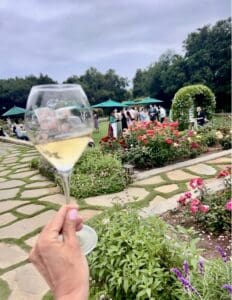
Wine Travel San Ysidro Ranch
What I Look for as a Luxury Wine Travel Writer
When I cover a luxury hotel or resort through wine, I am not simply interested in how many bottles are in the cellar or whether there is a trophy vintage on the list. I am looking for point of view and for the details that reveal how thoughtfully wine has been woven into the guest experience.
Does the wine program tell me something about where I am? Is there a relationship between the cellar and the surrounding region? Does the sommelier make discovery feel inviting rather than intimidating? Has someone thought about the glassware, the temperature, the pacing and the food? Are local producers given a meaningful place alongside international icons?
Most importantly, does the guest have a way into the story? A beautiful cellar behind locked doors may be impressive, but a tasting, dinner, conversation, tour or thoughtful pour can turn that collection into an experience.
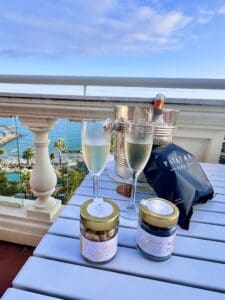
I am equally interested in the smaller moments. The first glass waiting on a terrace might reflect the vineyards visible in the distance, while a sommelier may introduce an unfamiliar local producer rather than automatically reaching for the famous label. A thoughtful pairing can reveal something about the region’s history or cuisine, and sometimes a bottle simply arrives at exactly the right moment, with enough ceremony to feel special but never so much that the guest feels intimidated.
These details tell me far more about a hotel’s relationship with wine than numbers alone. A vast cellar can be extraordinary, but so can a much smaller list assembled with intelligence, conviction and a clear sense of place. To me, true luxury has never been about abundance for its own sake. It is about intention, thoughtfulness and the feeling that every element has been considered as part of the experience.
Luxury Wine Travel
Why Luxury Hotel Wine Programs Matter
For hotels and resorts, wine has the ability to become far more than an amenity. A thoughtful wine program can give a guest another reason to dine at the property, book a tasting, linger over lunch, explore the surrounding region or return for an experience they did not have time for on the first visit.
A cellar can become a destination within the destination, while a sommelier can become one of the property’s most memorable storytellers. A wine dinner can introduce guests to the people and traditions of a region, and a beautifully conceived by the glass program can encourage discovery without requiring a grand commitment.
One unforgettable bottle, served in exactly the right place, can become part of the story a traveler tells about the trip for years.
This is especially important in luxury travel because a beautiful room alone is no longer the whole story. The most memorable properties understand that the hotel itself can become part of why we travel, and that hospitality is created through layers of design, food, service, landscape, culture, people and small moments of discovery that could not have happened quite the same way anywhere else.
Wine has the ability to connect all of those layers.
For a hotel surrounded by vineyards, that connection may seem obvious, but the opportunity extends far beyond traditional wine country. A coastal resort can explore the wines and seafood of its region. A city hotel can use its cellar to introduce guests to national wine culture. A cruise line can allow the wines to change with the ports. A historic property can use old vintages to tell stories about time and place.
In each case, wine becomes a passport within the journey itself.
Luxury Wine Travel Is About More Than Expensive Wine
This distinction matters to me because luxury wine travel is not simply drinking expensive bottles in expensive places. Some of the most luxurious wine experiences have very little to do with price.
Luxury can be access to a cellar rarely seen by guests, or the opportunity to meet the sommelier who knows the story behind every bottle. It can be a beautifully chosen regional wine poured with lunch overlooking the place where it was grown. It can be the correct glass waiting at the table, a perfectly chilled bottle on a terrace, or a tasting created around something a guest has expressed curiosity about.
What makes those moments luxurious is the attention behind them. There is context, thoughtfulness and generosity in the experience, and when those elements come together, wine becomes more human rather than less. It becomes connected to food, landscape, architecture, history and the people who have welcomed us into their world.
This is the territory I continue to explore in my work as a luxury wine travel writer, the place where vineyards meet hotels, resorts, restaurants, design, food, service and destination.
I will always love walking among the vines and talking with the people who farm, ferment and bottle what eventually reaches our glass. But I am equally fascinated by what happens next. Where does that bottle travel, and who chooses it? Maybe it is opened overlooking the sea, beside a flickering fire or at a table set for dinner. The view matters, the food matters, and so does the story the sommelier chooses to tell. All of those details become part of how we experience the wine and, ultimately, how we remember it. Sometimes the vineyard begins the story, but the hotel is where the wine becomes unforgettable.
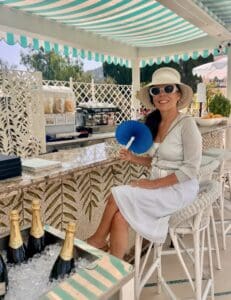
Wine Travel Writer Jamie Knee hosting wine event
Work with Jamie Knee
Jamie Knee is a luxury wine travel writer, Decanter contributing writer, global wine presenter, Forbes Travel Guide Speaker, international wine judge and founder of Petite Wine Traveler. Her work explores wine through place, luxury hospitality, food, culture and destination, bringing the stories behind the glass to readers, travelers and audiences around the world.
Through editorial coverage, luxury wine travel features, destination storytelling, hosted tastings and on camera and on stage presentations, Jamie works with hotels, resorts, wine regions, restaurants, cruise lines, tourism organizations and hospitality brands to turn wine and sense of place into memorable stories and guest experiences.
For luxury hotel and resort coverage, wine travel features, hotel wine program stories, hosted wine experiences, media partnerships and destination storytelling collaborations, contact Jamie through Petite Wine Traveler.




Love this article and your wine travels!
Thank you! I appreciate it!
Love this article and all your wine travels!
Such a great topic. Thanks!’