
Steven Spurrier and the Evolution of English Sparkling Wine
Global Wine Writer, Jamie Knee, on Steven Spurrier, Bride Valley, and the Rise of English Wine
By Jamie Knee
As a global wine writer and communicator, one of the early interviews that helped shape my perspective on wine travel was my conversation with Steven Spurrier, the legendary British wine merchant, critic, author, and visionary behind the 1976 Judgment of Paris. Long before English sparkling wine became part of the broader luxury wine travel conversation, Spurrier saw something extraordinary in the chalk soils of Dorset, where he and his wife Bella would go on to create Bride Valley Vineyard. This interview remains one of my favorite examples of what I love most about global wine writing: following a glass into landscape, legacy, climate, risk, and place.
As a luxury wine writer and globally recognized wine communicator, I have spent years exploring the world’s most intriguing wine regions, yet few stories captivate me like the rise of English Sparkling Wine. With climate shifts transforming cool-climate viticulture, England has emerged as an unexpected star. Rolling hills once known only for pastoral charm now flourish with Chardonnay, Pinot Noir and Pinot Meunier, the classic trio behind world-class traditional-method sparkling wines.
From Judgment of Paris to Dorset: Spurrier’s Final Wine Masterpiece
Among the pioneers shaping this new chapter is Steven Spurrier, legendary British wine merchant, critic, author, and the visionary behind the historic 1976 Judgment of Paris. His final passion project, Bride Valley Sparkling Wines in Dorset, reveals a deeply personal chapter in his extraordinary legacy. Bride Valley Vineyards, UK
Jamie Knee’s Interview with Steven Spurrier
In this feature, I sit down with Spurrier to explore what it truly takes to plant vines in England, how climate change reshapes British terroir and why English sparkling wine continues to rise in global prestige.
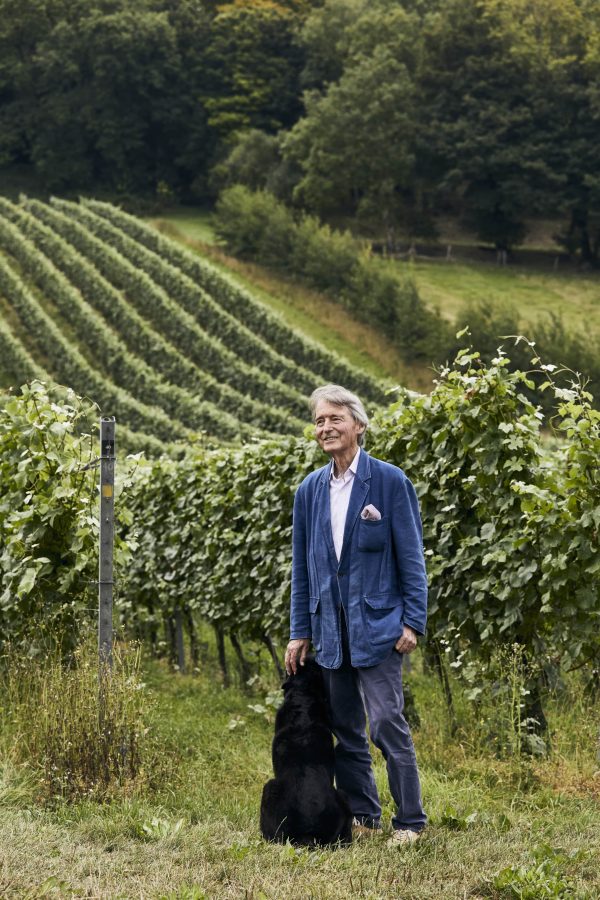
The Vision Behind Bride Valley Sparkling Wines
Jamie Knee: How did you transition from being a wine educator to starting your vineyard making sparkling wines?
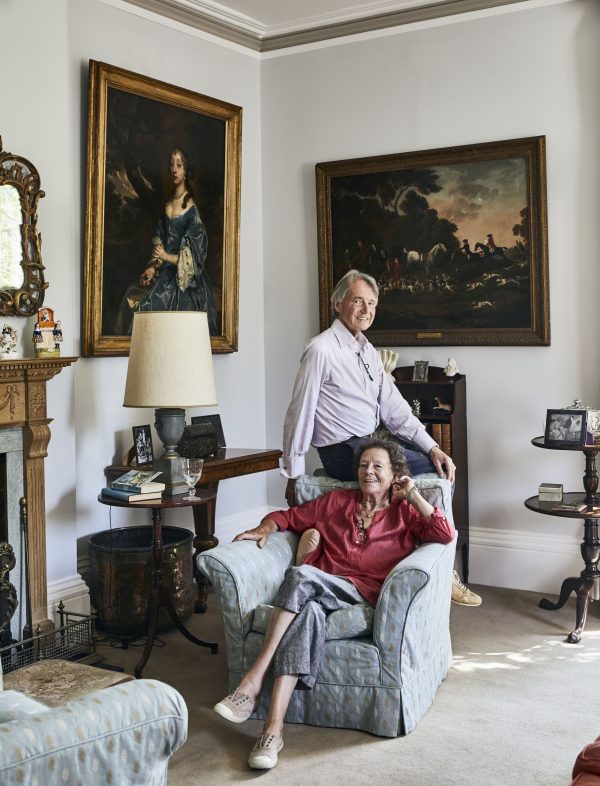
Steven Spurrier: In 1982, we decided to move back to England from Paris as a family to educate our children. We had a big house in London, and my wife Bella said, If we are going to have a big house, I’d rather it be in the country. We started to look around the countryside, and on the advice of my mentor Michael Broadbent, we met with people who were selling their house in Dorchester, where I am now. I loved it; it was a lovely Victorian Georgian house with a nice cellar. My wife said we couldn’t buy it because there was no place for her horses, which she wanted to breed. The owners stated that a farm became available at the end of the village and we bought the house and the 200-acre farm next to it.
JK: Did you know you were going to plant a vineyard?
SS: Walking around the farm, I noticed a surprising amount of chalk in the soil. At the time, trips back and forth to Paris were part of my routine while teaching at Acadamie du Vin, and on one of those visits a few chalk blocks came with me, tucked into my pocket. Once in Paris, they landed on the desk in front of my colleague Michele, and I asked, Michele, where do you think these are from? He replied, “Well, of course, Champagne”. I said, they’re from South Dorset. Michele smiled and answered, In that case, you should plant a vineyard.
JK: How did they come to fruition?
SS: I didn’t at the time, but I had my friend from Chablis come over and take a sample back with him for analysis. It came back that the soils would be good for Chardonnay or any cool-climate grape like Pinot Noir; this was in 1987 or 1988.
In 1996, I attended the opening ceremony for the International Wine and Spirit Competition awards. As I walked in, the chairman handed me a glass and asked, What do you think this is? I studied it, swirled it, smelled it, and tasted it. Then I answered, Champagne. Chardonnay. Probably a Grand Cru.He smiled and told me: The wine was Nyetimber. An English sparkling wine had just beaten the top Champagnes. Nyetimber set the benchmark in that moment, and it still leads the category today.
Then momentum built in the late 1990s as more vineyards planted in the area, including Ridgeview, a producer I especially admire. In 2006, Ridgeview won a gold medal at the Decanter World Wine Awards. That result made the message unmistakable. England had arrived, and the sparkling wine world needed to pay attention.
How to Establish a Vineyard
JK: What was your first step in establishing a vineyard?
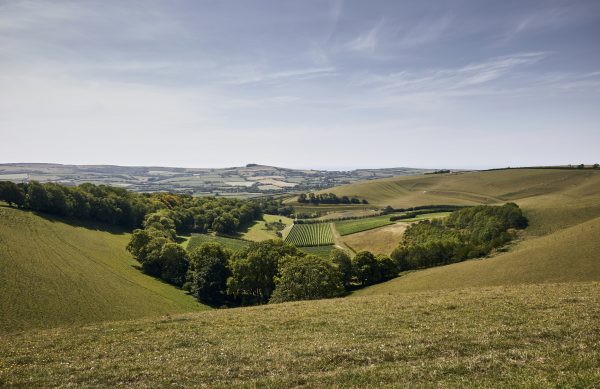
SS: I built a comprehensive Champagne dossier, and I mapped our farm’s exact location, just a half-hour from Kimmeridge, the town that gave Champagne soils their name. We truly have Kimmeridgian chalk. I presented the dossier to my friends, Jean-Claude and Jean-Charles Boisset, and they immediately agreed it was a great idea. They sent their people over three times to explore a joint venture, but they wanted at least 70 acres. It didn’t work out, but their advice was clear: you and Bella plant the ten hectares, 25 acres. Buy your vines from Burgundy, from the supplier who supplies the Domaine Romanée-Conti. Then take the grapes to Furleigh Estate, 20 minutes away, to Ian Edwards, 2012’s winemaker of the year, and if all goes well, we will buy your wine.
JK: And did it go well?
SS: No, all didn’t go well until the 2018 crop. I was pulling my hair out. But with the 2018 and 2019 vintage, it has turned around. I can see the light at the end of the tunnel. If it hadn’t been for Boisset, I wouldn’t have done it.
Growth Production
JK: Can you tell us about the growth of production until your most recent vintages? What did you find, and what did you learn?
SS: We planted the first vines in 2009. In 2011, we had just 450 bottles from the three-year-old vines. In 2012, we were rained off, and so were other vineyards in the area, including Nyetimber. Rain again affected the 2013 vintage, and we only produced 2,500 bottles. In 2014, we had a breakthrough and produced about 22,000 bottles from 30,000 vines. I aimed to make a bottle a vine; then I could break even and turn a profit. But then 2015, 2016, and 2017 produced under a quarter-bottle a vine, and not even the Domaine Romanée-Conti can survive on that. But then 2018 rolls around, and it’s a Mediterranean vintage, and we make one and one-third bottles of wine per vine and 60,000 bottles from 42,000 vines. And in 2019, we made 55,000 bottles.
The vines are almost ten years old on average; they now know what they have to do. They are reaching maturity, and I think over ten years, we will get one bottle per vine, if not more. Volume-wise, the panic is over. Quality-wise, the flavor of the juice is getting so much better.
Grape Varieties
JK: What varieties have you planted?
SS: We have 55 percent Chardonnay and seven different clones. Twenty-five percent Pinot Noir with five different clones, and 20 percent Pinot Meunier with two clones.
Planting in Dorset
JK: Are there any rules with planting in Dorset?
SS: No rules. But there’s a huge amount of planting. In 2009, only 1,000 hectares in England were planted, and now, there are 5,000 hectares. Last year, there were 3 million vines planted, and it’s going much too fast. That’s 3 million bottles of wine trying to find a home. I’m not worried about the established brands, but we are small with only 10 hectares. The big guys will have to cut their price to get market share, which is not what I’m going to do. If anything, I’m going to put my price up. You can’t afford to make the kind of wine I want to make by cutting corners.
JK: You sell a cremant. Is cremant made the same way as a Champagne?
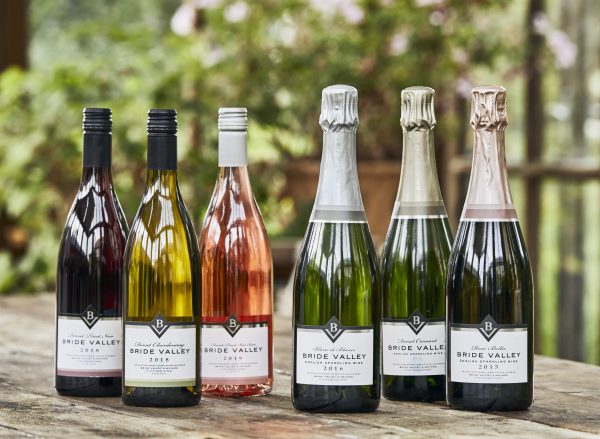
SS: A cremant has one-third less fizz. Champagne has up to six bars, and cremant is not allowed to go past four. Mine has 3.8 bars of fizz. Cremant in French means creamy, and that is the goal. My cremant is a blend of my 2015 and 2016 vintages, which produce the right effect. I didn’t want the wine to flow onto the palate in an aggressive manner. This cremant flows. It’s the only English cremant; nobody else in UK is doing this. I was told I could not use the name cremant from the French government, since it’s French-specific. But I was informed by a colleague that since I have a specific vineyard in a specific area, I can apply for my appellation and call it Dorset Cremant. So, we became only one of a dozen English Wines with its appellation.
Hesitation in Planting a Vineyard?
JK: Was there any hesitation with being so renowned as a critic to starting your vineyard and now having your sparkling?
SS: Well, the only hesitation was now I was on the selling side and presenting to the journalists. But my colleagues Oz Clarke, Jancis Robinson, and Jamie Goode all liked it. They wouldn’t have spared me if it wasn’t good. Over the years, I used to walk around the farm. It’s in a big bowl and from the top of the land, you can see out to the sea, only about three miles away. All the vineyards are planted in the lower part of the bowl, and as I used to walk around the farm, I would imagine vineyards there. I knew I wanted them there. It was also a sheep farm that was losing money, and I said, I want to turn this money-losing sheep farm into a profit making vineyard. I think we will be seeing a profit by the end of next year.
Steven Spurrier’s Legacy and the Next Generation of English Wine
In addition to the Dorset Cremant, Bride Valley Vineyards has two additional sparkling wines, including the Blanc de Blancs 2016 and the Rose Bella 2015.
The 2017 Vintage will be available soon! I look forward to enjoying wine travel to the Dorset area soon to taste these amazing wines in person.
Read the article at the Vintner Project
Editor’s note: This article was originally published in 2021 and has been lightly updated for clarity, formatting, SEO, and current context. The interview reflects Steven Spurrier’s own words and the moment in time when English sparkling wine was gaining new global attention.