
What It Means to Be a Good Wine Traveler

Wine travel speaker and writer Jamie Knee exploring Sonoma Wine Country
Five ways to travel wine regions with curiosity, respect and a deeper connection to place. By Jamie Knee
Over years of traveling through wine regions around the world, my philosophy of Wine as a Passport™ has continued to evolve. I have always loved the way wine gives us a reason to go somewhere. A bottle makes us curious about the landscape where the grapes were grown. A tasting leads us toward a restaurant, a hotel, a village, a farmer, a market or a road we might never otherwise have taken.
That idea now runs through much of my professional work. In my Wine as a Passport™ presentations for wine regions, tourism organizations and hospitality professionals, I talk about how destinations can encourage visitors to stay longer, explore more deeply and understand what makes a particular place worth returning to. In my consumer-facing talk, Seeing the World Through a Wine Glass, I look at the same idea from the traveler’s side, exploring how wine can help us understand a destination through its food, geography, culture, traditions and people.
The more I travel, the more I have come to believe there is another part of this conversation that deserves just as much attention. We spend a great deal of time discussing what wineries, hotels, restaurants and tourism organizations should do for visitors, yet the traveler has a role as well. Being a good wine traveler means remembering that the beautiful region we have come to experience is also somebody else’s home. People live there, raise families there, run businesses there and care for the landscapes we have traveled so far to see.
I certainly do not get everything right on every trip, but years on the road have made me much more conscious of how I travel, where I spend money, what I ask for and how willing I am to let a destination be itself. These are five things I try to keep in mind whenever I travel through wine country.
Bringing Wine As a Passport to New Zealand
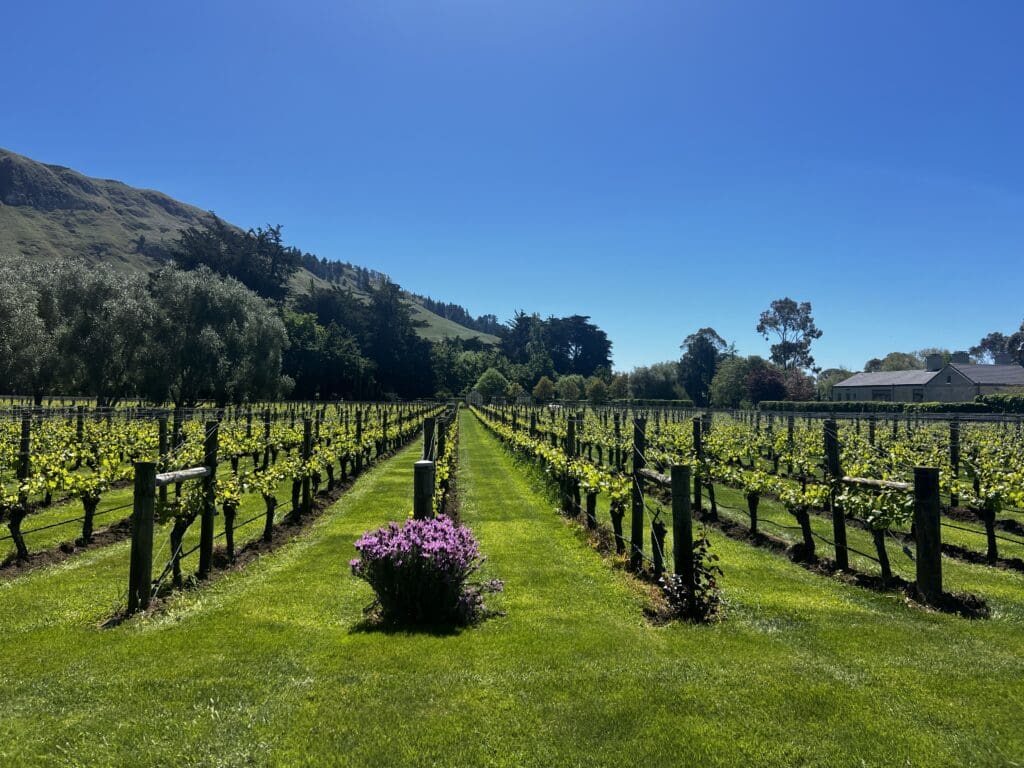
Wine tourism in Hawkes Bay, New Zealand, showing vineyards and surrounding landscape
1. Let Some of Your Travel Dollars Stay Where You Travel
I love cruising, particularly on smaller ships that can reach ports and communities that enormous vessels cannot. It has taken me to wonderful places and introduced me to destinations I might never otherwise have visited, but it has also made me think more carefully about what happens when travelers step ashore.
It is very easy to eat breakfast on the ship, walk around a town for several hours, take photographs and return aboard for the lunch that is already included in the fare. I understand the temptation because I have already paid for that meal too, but I also find myself asking what the town actually received from my visit.
When I go ashore, I try to participate in the local economy in some small way. I might have lunch in a neighborhood restaurant, buy something from a bakery, stop at a local wine shop, hire a guide or bring home something made by an artisan in the region. None of this has to be extravagant. A coffee, a pastry, a bottle of local wine or a handmade souvenir still allows some of the economic benefit of tourism to remain with the people who welcomed me.
The same principle applies whether I arrive by ship, car or airplane. Travel should feel like some form of exchange. We receive the pleasure of experiencing someone else’s home, and whenever possible I want some of what I spend to support the people and businesses that make that place worth visiting.
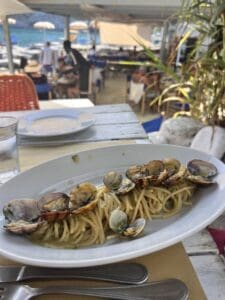
Supporting local restaurants and businesses while traveling in Ponza, Italy
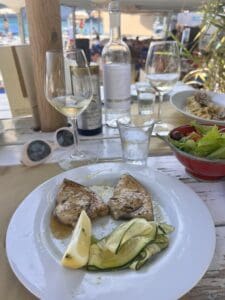
Eating locally while traveling in Ponza, Italy
2. Eat and Drink Where You Are
One of the easiest ways to miss the point of travel is to arrive somewhere new and spend the entire trip searching for the food and wine we already know from home.
I recently heard about travelers visiting Piemonte for a cooking experience and expecting to prepare spaghetti and meatballs. That dish may feel broadly Italian to many Americans, but it is not a traditional Piedmontese specialty. Piemonte has a remarkable culinary identity of its own, shaped by local rice, cheeses, hazelnuts, truffles, vegetables, regional pastas and wines.
That is what I want to discover when I travel. I do not eat meat, which means there are regions where I have to navigate local menus differently, but I still want to understand how people eat there. I look for the vegetables, cheeses, beans, rice, fruit, breads and seafood that belong to the local table rather than expecting the destination to recreate what I would order at home.
Wine is no different. If I am visiting a region known for a grape I rarely drink in California, that is precisely what I want in my glass. I do not travel thousands of miles to recreate Santa Barbara. I want Piemonte to feel like Piemonte, Hawke’s Bay to feel like Hawke’s Bay and Rioja to feel like Rioja.
One of the pleasures of wine travel is allowing a destination to introduce itself on its own terms. That does not mean we will love every wine or every dish, but it does mean giving the place a fair chance to show us what belongs there.
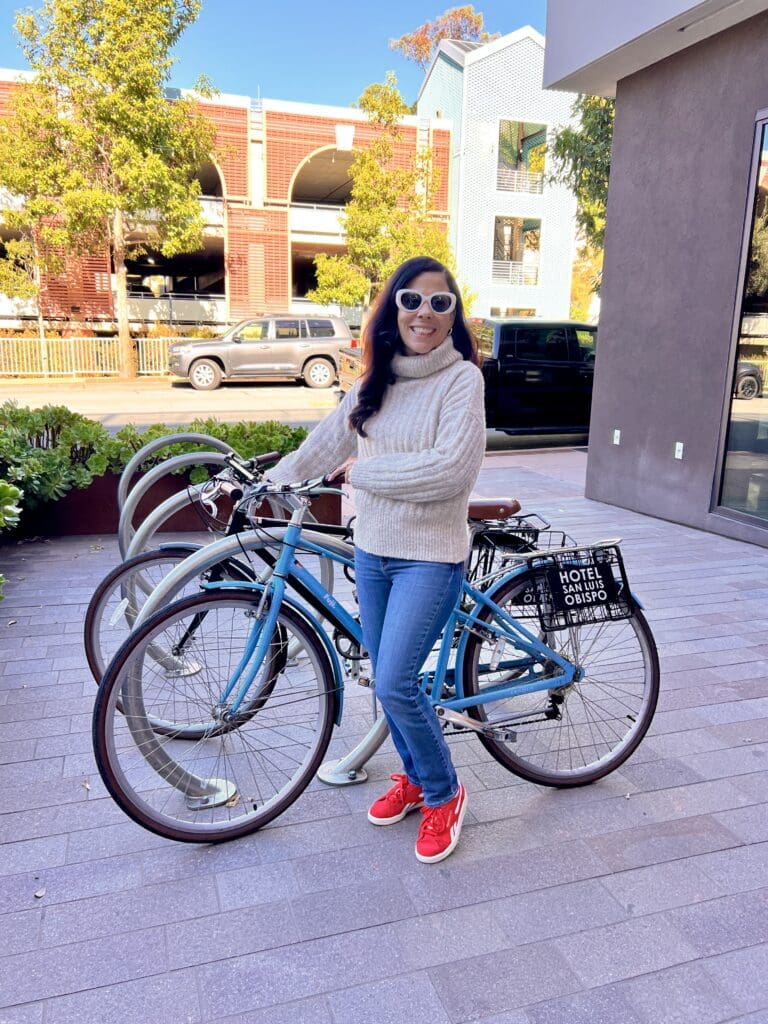
Locally connected wine country accommodation on the SLO Coast.
3. Think About Where You Stay
Where we stay is part of the travel experience, but it also affects the community we are visiting. I love a beautiful hotel and have spent much of my career writing about hospitality. A great hotel can be one of the richest ways to experience a destination, especially when it employs local people, works with regional producers, serves local wine and food, and encourages guests to explore beyond the property.
I also love cottages, guesthouses, agriturismi, farm stays and homestays. What I have become more conscious of is whether my accommodation has a meaningful relationship with the community around it.
Short-term rentals have become complicated in some destinations, particularly where housing availability and affordability have become serious concerns. There is no single rule that applies everywhere, and I do not think travelers need to turn every trip into a moral calculation. I do think it is worth paying attention to where our money goes and what kind of tourism we are supporting.
When I want a home-style stay, I often look for locally owned cottages, farm stays, guesthouses and inns. A locally owned boutique hotel can serve the same purpose. I also happily stay with larger hospitality brands when they have a genuine relationship with the place they are in and help guests discover the surrounding community rather than keeping them entirely inside the property.
The question I increasingly ask myself is who benefits from my being there. It is a useful question in wine country, and I think it is just as useful almost anywhere we travel.
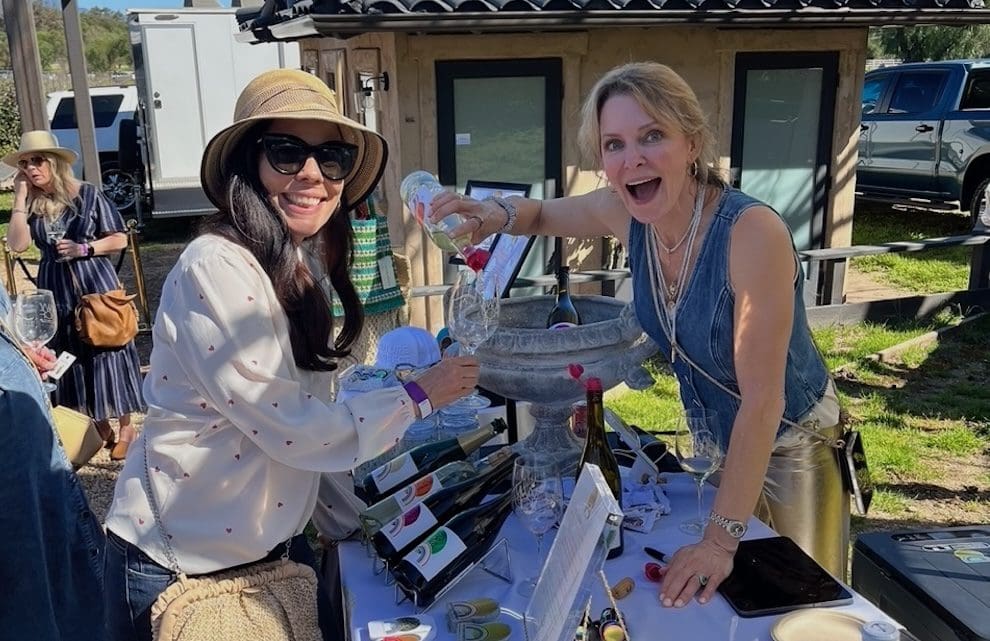
Jamie Knee learning about Future Perfect Wines during a Santa Barbara Wine Country Festival
4. Bring Curiosity Instead of Comparison
Some of my best experiences on the road have begun because I asked someone a question. I want to know what people drink locally, where they would eat on their day off, what grows in the surrounding fields, which dish I should try before I leave and what visitors usually miss when they come through town.
Ask questions, be inquisitive. Curiosity is one of the best things we can bring into another culture. What can close a conversation quickly is arriving somewhere and continually explaining how differently everything is done at home. The fact that a place is different is often the reason I wanted to travel there in the first place.
There will be wines I do not love, foods I would not order again and customs that initially confuse me. That is part of being away from home. Being respectful does not require pretending that every experience is wonderful. It simply means allowing a place to be itself before judging it against the standards of somewhere else.
I try to listen before deciding what I think, and I always learn at least a few words in the local language: hello, please, thank you and, perhaps most importantly after a long day of wine tasting, “Where is the bathroom?” That last one has proven surprisingly useful around the world. I ask people what they are proud of and let locals tell me where I should go rather than assuming everything worth discovering appeared at the top of a search result. People can tell when you are sincerely interested in where they live, and those conversations are often the ones that lead to the most memorable parts of a trip.
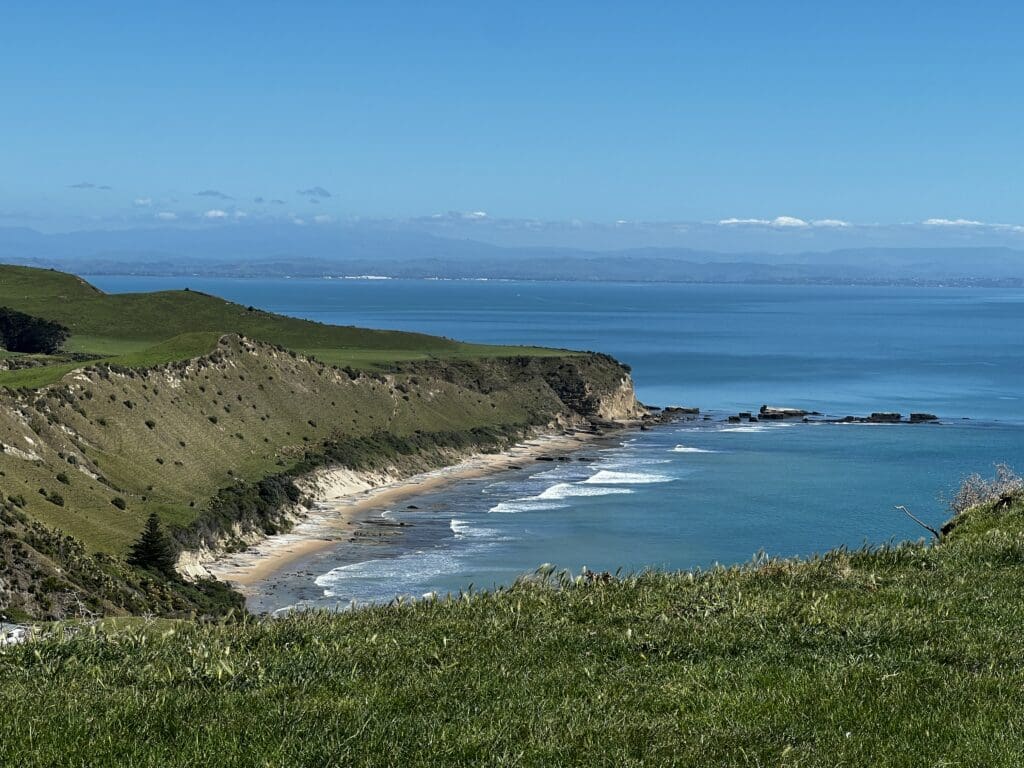
Exploring beyond the winery during a wine travel experience in Hawke’s Bay
Exploring beyond the winery during a wine travel experience in Hawke’s Bay, at Cape Kidnappers.
5. Go Beyond the Winery
Wine travel should include wine, of course, but some of my favorite days in wine country have involved surprisingly little time sitting at a tasting bar.
I want to walk through the vineyards, hike the countryside, visit the farmers market, meet a cheesemaker or stop at the bakery in the morning. I want to spend time with the farmer, chef, fisherman, olive oil producer or artisan whose work is part of the life of the region. Sometimes the most revealing part of a wine trip happens when the wine is not even in the glass.
Wine does not exist separately from any of this. The same climate shaping the vineyard influences what else grows nearby. Local food traditions develop through agriculture, geography and history. Architecture tells us something about the generations that came before us, while markets show us what people actually cook and eat now.
This is the part of wine tourism and enotourism that fascinates me most. I love tasting an exceptional wine, but I enjoy it even more when, by the time I taste it, I understand something about the landscape, food, people and traditions that created it.
That is very much at the heart of Wine as a Passport™. Wine can be the first invitation into a place, and the real pleasure comes from following where that invitation leads.
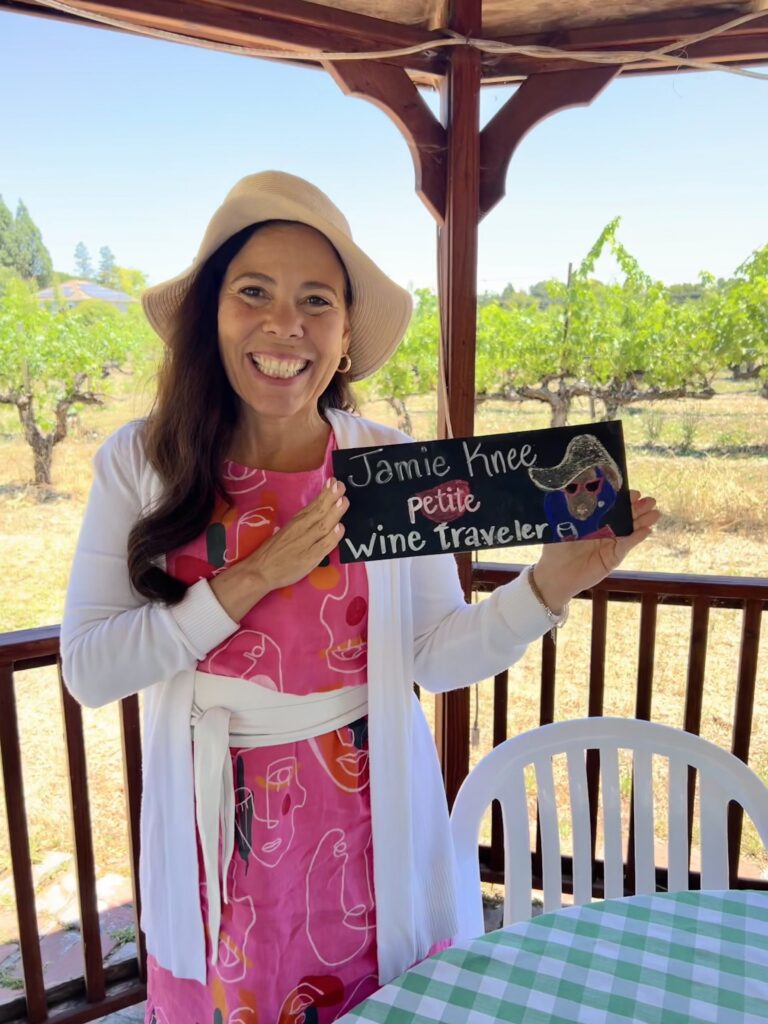
Wine Travel Writer, Jamie Knee, at Retzlaff Vineyards
Wine Travel Is a Two-Way Relationship
In my professional Wine as a Passport™ presentations, I spend a great deal of time talking with wine and tourism professionals about their side of this relationship. We discuss how a winery can introduce visitors to the restaurant down the road, how a hotel can connect guests with the local wine region, how tourism organizations can help travelers understand what exists beyond the tasting room and what might persuade someone to stay one more night.
When I speak to wine lovers through Seeing the World Through a Wine Glass, the perspective changes slightly. The destination can create the invitation, but the traveler still decides whether to accept it. We decide whether to wander into the small café, order the local wine, hire the guide, buy something from the artisan or give ourselves enough time to discover what exists beyond the famous attraction.
For me, being a good wine traveler comes down to arriving with curiosity, participating while I am there and trying to leave knowing that my visit contributed something positive to the place that welcomed me. Wine may give us the first reason to go somewhere, but what we do once we arrive determines how deeply we experience it and what kind of traveler we become.
That idea has become an increasingly important part of what Wine as a Passport™ means to me. The wine may begin the journey, but the relationship we build with the place is what makes the journey worth remembering.
About Jamie Knee
Jamie Knee is a global wine presenter, international wine travel speaker and award winning wine travel writer specializing in wine tourism, enotourism, luxury wine travel, hospitality and destination storytelling. She is a Decanter Contributing Writer, Forbes Travel Guide Speaker, founder of Petite Wine Traveler and creator of Wine as a Passport™.
Her professional presentations include Wine as a Passport™, created for wine regions, tourism organizations and hospitality audiences, and Seeing the World Through a Wine Glass, a consumer-facing exploration of how wine can lead us into travel, food, culture and a deeper understanding of place.




Love this concept. Thank you for sharing! xx
I’m glad you like it. Cheers!
Loved this post — the photos of this place make me want to go back. Will be sharing this with a friend who is planning the same route.
I appreciate it. Thank you for sharing!