
Why Wine Travel Matters: Wine as a Passport to Place, Culture, and Connection
What global wine regions have taught me about belonging, storytelling and the power of travel
By Jamie Knee
Originally published April 1, 2026. Updated November 2026.

Wine travel is often discussed as a luxury, a leisure pursuit, or a beautiful way to spend time. It can certainly be all of those things. But at its most meaningful, wine travel is something deeper.
It is a way of understanding a place through its people, its table, its traditions, and its landscape. It is a way of moving beyond surface tourism into something more human and more memorable. And increasingly, it is one of the most powerful ways to build cultural connection across borders.
I was reminded of this recently after returning from the International Wine Tourism Conference, where I presented my keynote, Wine as a Passport. I arrived home thinking not only about the regions I have visited, but about the larger truth behind them: wine travel matters because it offers far more than tasting. It offers access, context, belonging, and memory.
For me, wine has long been a passport. It grants entry not just into vineyards and cellars, but into the deeper identity of a destination.

Wine as a Passport to Culture
There are many ways to travel well, but few experiences translate culture as naturally as wine.
A glass of wine can tell you how a landscape feels. It can reveal the rhythm of local life, the foods that belong on the table, the traditions that shaped a region, and the values that continue to define it. Wine makes abstract ideas sensory. Climate becomes freshness or ripeness. History becomes texture and continuity. Local pride becomes something you can taste.
This is one of the reasons wine travel matters so much. It turns a visitor into a participant.
Rather than remaining outside a place, observing it from a distance, wine invites you in. It opens conversation with winemakers, growers, chefs, hoteliers, and local hosts. It creates a context for understanding not just what a destination looks like, but how it lives.
That is the difference between tourism and true connection.
What Global Wine Regions Have Taught Me
Some of the most meaningful wine lessons of my life have come not from textbooks, but from the regions themselves. Over the past few years, wine travel through Spain, Italy, Croatia, France, Mexico, Germany, and Poland has shown me that every region teaches its own version of belonging.
Spain taught me about joy and rhythm
Spain has always reminded me that wine belongs naturally to life. It belongs to the lunch table, to the long conversation, to the afternoon unfolding slowly into evening. There is seriousness in Spanish wine, of course, but there is also ease. A confidence that pleasure and quality do not need to be separated.
Spain taught me that wine can be both elevated and deeply lived in. It can be part of culture, not a performance of it.

Italy taught me about intimacy
Italy has shown me how powerful personal welcome can be. Some of my most memorable experiences have come from being invited into a winery or a table in a way that felt immediate, generous, and deeply human.
This is what so many great Italian wine regions do so beautifully. They connect the bottle to family, to place, and to memory. When that happens, the tasting no longer feels transactional. It becomes emotional. You do not simply remember what you drank. You remember who welcomed you, what they shared, and how the region made you feel.

Croatia taught me that discovery still matters
Croatia has reminded me that some of the most compelling wine travel experiences happen in places that still feel like a discovery. There is beauty in regions where the connection between land, sea, food, and hospitality remains vividly intact.
Wine travel in Croatia feels personal. It feels close to real life. And that intimacy is part of what makes emerging and less expected wine destinations so exciting.

France taught me that wine carries history
France remains one of the clearest examples of wine as cultural continuity. In French wine regions, you feel how deeply wine and history are intertwined. The cellar, the table, the local pairings, the rituals of hospitality, all of it carries memory.
France taught me that wine is never only about what is in the glass. It is also about inheritance, preservation, and the quiet ways a region continues to tell its story generation after generation.
Mexico taught me about energy and possibility
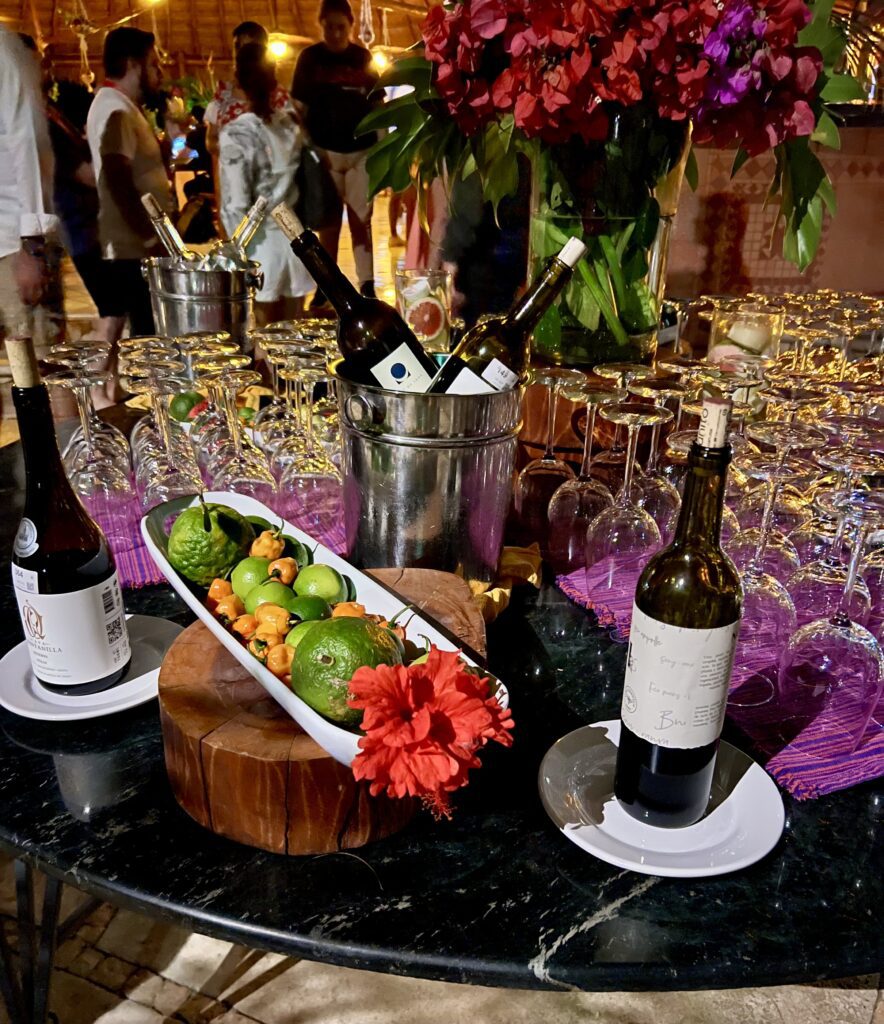
Mexico has shown me how dynamic wine travel can be. The hospitality is warm, the creativity is palpable, and the sense of momentum is real. Wine in Mexico feels forward looking while still rooted in place.
That matters. It reminds us that great wine travel does not belong only to the most historic regions. It also belongs to places shaping an exciting identity right now.
Germany taught me about elegance and precision
Germany has taught me that some of the most lasting impressions come through restraint, purity, and landscape driven beauty. The vineyards, the cool light, the precision in the wines, all of it speaks to a powerful relationship between place and expression.
Germany reminds us that wine can be delicate and commanding at once, and that elegance often leaves the deepest mark.
German Wine at Berliner Wine Trophy
Poland taught me about innovation
Poland has been one of the most exciting recent discoveries in my wine travel life. What struck me immediately was the spirit of innovation.
Many Polish winemakers are first generation. They are building vineyards, estates, and businesses from the ground up rather than inheriting them from parents or grandparents, as happens in so many classic wine regions. They are learning through travel, through study, through collaboration, and through conversations with winemakers in other countries.
That gives Poland a remarkable energy. It feels ambitious, open, experimental, and full of possibility. In many ways, it feels like the wild west of Eastern Europe in the most exciting sense. It is a place where a new wine identity is being written in real time, and that makes it a region worth watching very closely.
Delivering Wine Presentation in Poland

Where Wine as a Passport™ Has Taken Me
What began as a way of describing my own relationship with wine travel has increasingly become a conversation I am having with wine regions, tourism organizations and hospitality leaders around the world.
In Sonoma County, I spoke to the tourism community about a destination known for extraordinary wine that also has a dramatic Pacific coastline, redwood forests, farms, restaurants, hotels and communities with very different personalities.
What meant the most to me happened after the presentation. Several attendees approached me with notes they had taken and ideas they were already considering for their own businesses. The conversation had moved from inspiration into application.
A few weeks later, I carried Wine as a Passport™ to Hawke’s Bay for the Great Wine Capitals Annual Conference. Surrounded by people shaping wine tourism in leading regions around the world, many of the questions felt remarkably familiar.
What makes someone connect with a place? What encourages a traveler to explore a little farther? Why do we return to certain destinations years later while others fade quickly from memory?
Those experiences have made Wine as a Passport™ a much larger part of my professional work. I continue to adapt the conversation for different destinations, industries and audiences while keeping one idea at its center.
The wine is often where curiosity begins. It should never be where discovery ends. Global Wine Presenter Jamie Knee, speaking in Hawkes Bay, NZ
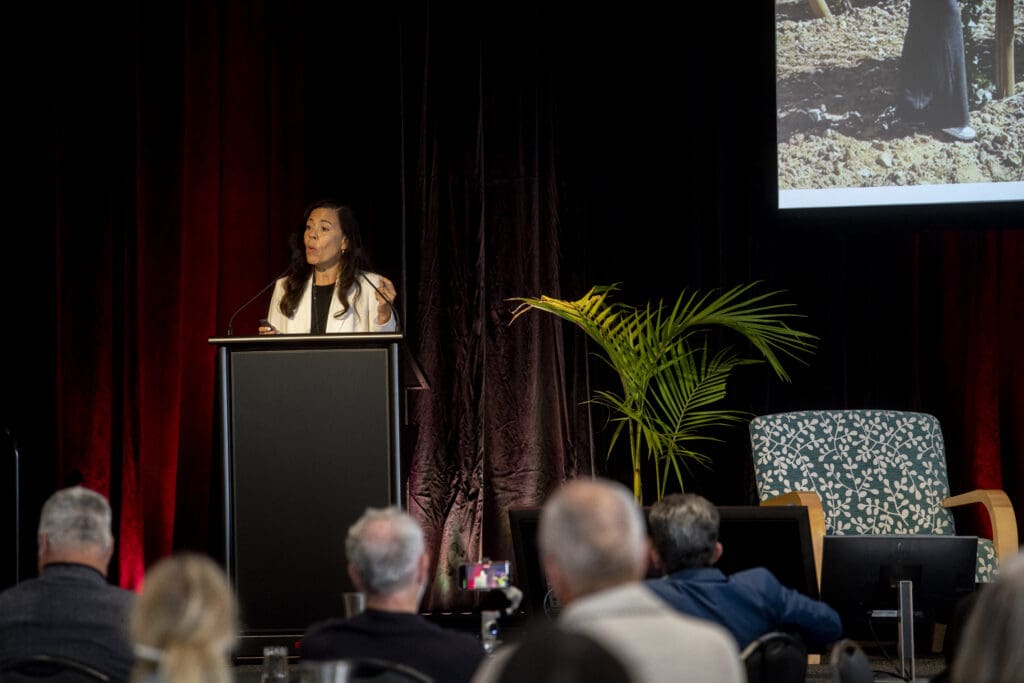
Jamie Knee, Global Wine Presenter and International Keynote Speaker at the Great Wine Capitals Conference
______________________________________________________________________________________________
Why Storytelling Matters to Wine Travel
Travelers have access to more information than ever before. They can find tasting rooms, hotels and restaurants within seconds.
Information alone, however, rarely creates desire.
Stories give a destination dimension. They help us understand why a vineyard matters, why a family stayed, why a local dish belongs with a particular wine or why the landscape looks the way it does.
This is where wine travel storytelling becomes valuable both editorially and strategically.
The most memorable destinations do more than tell us where to go. They give us a reason to care once we arrive.
A traveler may admire an extraordinary bottle, but years later they may be more likely to remember the person who poured it, the lunch that lasted longer than expected or the view that suddenly made the character of the wine understandable.
That emotional connection is one of the great strengths of wine tourism. What it Means to be a Good Wine Traveler

What This Means for Wine Regions and Hospitality
For wine regions, tourism organizations, hotels and hospitality businesses, the opportunity reaches well beyond the tasting room.
A winery can introduce visitors to the farmers, restaurants and landscapes around it. A hotel can use wine to help guests understand where they have arrived rather than offering the same experience they might encounter anywhere else. A restaurant can connect the bottle to local ingredients and people.
The strongest experiences allow each part of a destination to support the others.
This does not require turning every visitor into a wine expert. In fact, some of the most successful wine travel experiences do exactly the opposite. They make wine feel welcoming enough to become an invitation into everything else.
That is also why collaboration matters. When wineries, hotels, restaurants, artisans and tourism organizations understand the larger story they share, visitors have more reasons to explore. And perhaps, one more reason to stay another night.

Wine as a Passport to People, Place and Memory
The more I travel, the less interested I become in treating wine as something separate from the world around it.
I want to know what grows nearby, understand the landscape and meet the people who live there. I am interested in tasting what belongs on the table and discovering what someone local thinks I should see tomorrow.
Wine gives me a reason to ask those questions.
That has taken me through vineyards, cities, coastlines and communities around the world. It has also taken Wine as a Passport™ from an idea in my writing to stages in Europe, California and New Zealand, with new conversations continuing to emerge. For me, that is why wine travel matters.
A glass can introduce us to a destination. What we discover once we arrive is where the journey really begins.
About Jamie Knee
Jamie Knee is a Global Wine Presenter, International Wine Travel Speaker, Decanter contributing writer, Forbes Travel Guide Speaker and creator of Wine as a Passport™. Her work explores the intersection of wine, travel, hospitality, culture and place.
Jamie speaks internationally for wine regions, tourism organizations, hospitality groups, conferences and festivals, with presentations tailored to the destination, audience and wider conversation around wine travel.
For keynote speaking, presenting, moderating, media and destination collaborations, visit PetiteWineTraveler.com. About Jamie Knee, Wine Travel Writer and the Voice of Entourism