
Best German Wines 2026: My 20 Standout VDP.GROSSES GEWÄCHS Wines from Wiesbaden
In At the 2026 VDP.GROSSES GEWÄCHS Sneak Preview in Wiesbaden. By Jamie Knee
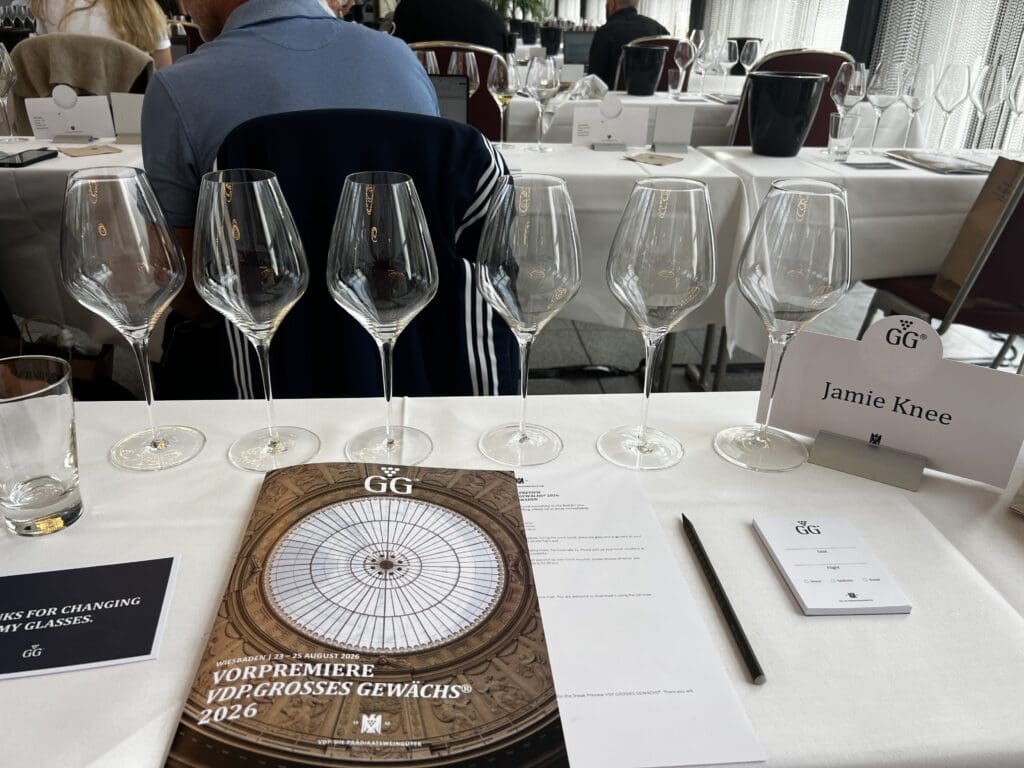
Jamie Knee, Wine Travel Writer Tasting at the VDP Grosses Gewächs in Weisbaden Germany
What happens when Germany’s great vineyards come together in one tasting room? At the 2026 VDP.GROSSES GEWÄCHS® Sneak Preview in Wiesbaden, I tasted my way through Riesling, Spätburgunder, Silvaner, Chardonnay and more, following the wines that stayed with me back to the places that shaped them, from Rheingau loess and Mosel slate to Nahe sandstone, Franken limestone and the red wine slopes of Württemberg. What began as a professional tasting became something far more interesting: a journey through Germany’s vineyards, soils, history and sense of place, and ultimately, a revealing look at the wines my own palate kept returning to.
Best German Wines 2026: My 20 Standout VDP.GROSSES GEWÄCHS Wines from Wiesbaden
There is a certain quiet that settles over a room when everyone is there to taste seriously. Glasses arrive, pages turn, pencils move across notebooks and, for a little while, the wine has to speak for itself.
That was the atmosphere I walked into when I was invited to the 2026 VDP.GROSSES GEWÄCHS Sneak Preview in Wiesbaden, held August 23 through 25 in the colonnades of the historic Wiesbaden Kurhaus. The annual preview brings together a carefully selected international audience from wine media, trade and top gastronomy to taste Germany’s newest VDP.GROSSES GEWÄCHS wines before their release. This year, the focus was on white wines from the 2025 vintage and reds from 2024, along with wines given additional time by their producers.
As a wine travel writer, international wine judge and global wine communicator, I spend much of my year tasting wine in the places where it is grown. Wiesbaden offered something rather different. Instead of traveling from vineyard to vineyard, many of Germany’s great vineyard sites had effectively come to me, and my tasting book became a map through the country.
As the numbered flights arrived, I recorded my impressions in real time and privately scored the wines as I tasted. Fruit, acidity, texture, structure, balance, minerality, mid palate and finish all factored into my assessment. The notebook captured what delighted me, but also what did not. Thinness bothered me, as did excessive bitterness, sulfur or smoke when it obscured the fruit. A wine could be technically impressive and still not be the one I most wanted to return to.
The numerical scores will remain private. They were useful as a professional tasting tool, but the more compelling question became why certain wines continued to rise to the top of my notes and what happened when I followed those wines back to the vineyards, soils and places that produced them.
That is where the tasting became wine travel.
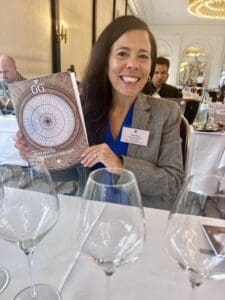
At the 2026 VDP.GROSSES GEWÄCHS® Sneak Preview in Wiesbaden, By Wine Travel Writer Jamie Knee
A Personal Top 20, Not an Absolute One
Before going further, this distinction matters. These are Petite Wine Traveler’s Top 20 wines from the 2026 VDP.GROSSES GEWÄCHS Sneak Preview that I personally tasted. This is not meant to be a definitive declaration of Germany’s twenty best wines, nor did I taste every wine presented in Wiesbaden.
The 2026 preview encompassed 594 VDP.GROSSES GEWÄCHS wines from 210 classified vineyard sites. Riesling accounted for 337 wines, followed by 131 Spätburgunders, with Weißer Burgunder, Silvaner, Grauer Burgunder, Lemberger and Blaufränkisch, Chardonnay and Frühburgunder completing the picture.
My twenty are simply the wines that spoke most clearly to my palate. Some were immediately beautiful. Others became even more fascinating once I discovered the vineyard and story behind them. A few helped me understand that I was developing a very clear preference for certain textures and structures. Together, they became my personal map of German wine.
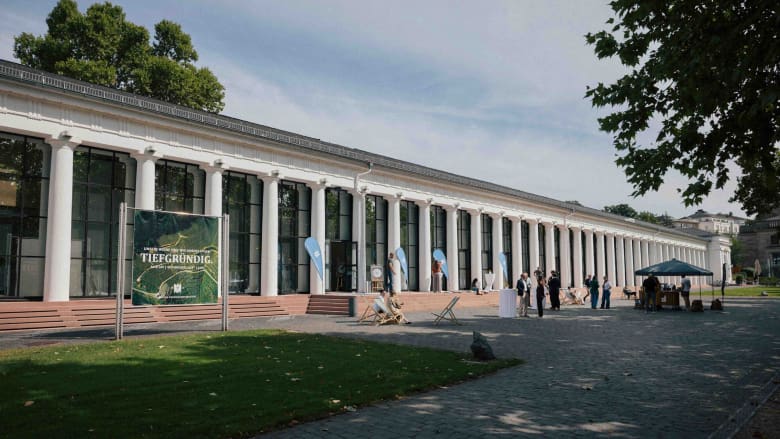
VDP GG Tasting held at the Kurhaus Weisbaden with Wine Travel Writer Jamie Knee
What Does VDP.GROSSES GEWÄCHS Mean?
For anyone beginning to explore German wine, those two little letters, GG, are important.
VDP.GROSSE LAGE represents the highest vineyard classification within the VDP system. These are precisely defined vineyard sites planted with grape varieties considered particularly suited to their region and location. Dry wines produced from them are known as VDP.GROSSES GEWÄCHS. Maximum yields are restricted to 50 hectolitres per hectare and grapes are selectively harvested by hand.
The idea ultimately begins with origin. Where did this wine come from? Once I began asking that question about the wines I loved most in Wiesbaden, patterns began appearing. VDP Germany Classifications
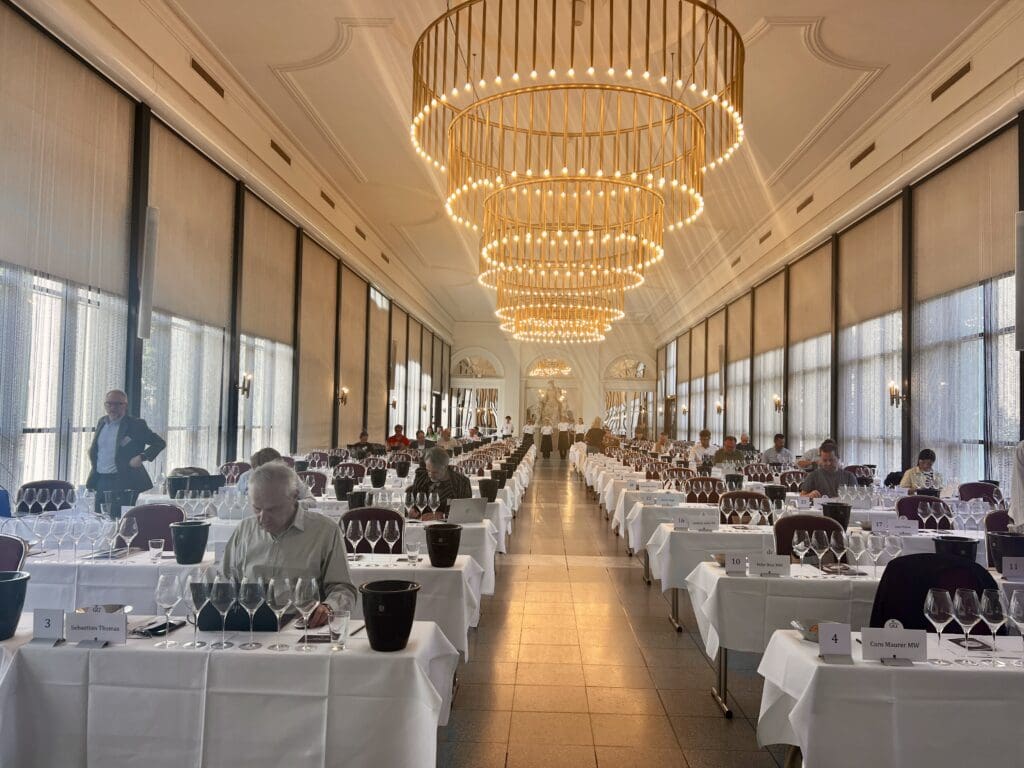
VDP GG Tasting held at the Kurhaus Weisbaden with Tasters and Wine Travel Writer Jamie Knee
Rheingau: The Region That Kept Calling Me Back
If one German wine region spoke most consistently to my palate in Wiesbaden, it was the Rheingau.
What fascinated me after the tasting was discovering just how different the ground beneath my favorite Rheingau wines could be. My notebook did not know any of that at the time. Instead, the same words kept appearing: texture, peach, citrus, creaminess, weight, minerality and acidity.
Flight after flight, I gravitated toward Rheingau Rieslings capable of holding two ideas at once. They were fresh without feeling severe, substantial without becoming heavy. My strongest notes repeatedly praised texture and mouthfeel alongside peach, citrus, creaminess and acidity. At one point I simply wrote “gastronomy wine,” because the structure immediately made me imagine what I would serve beside it.
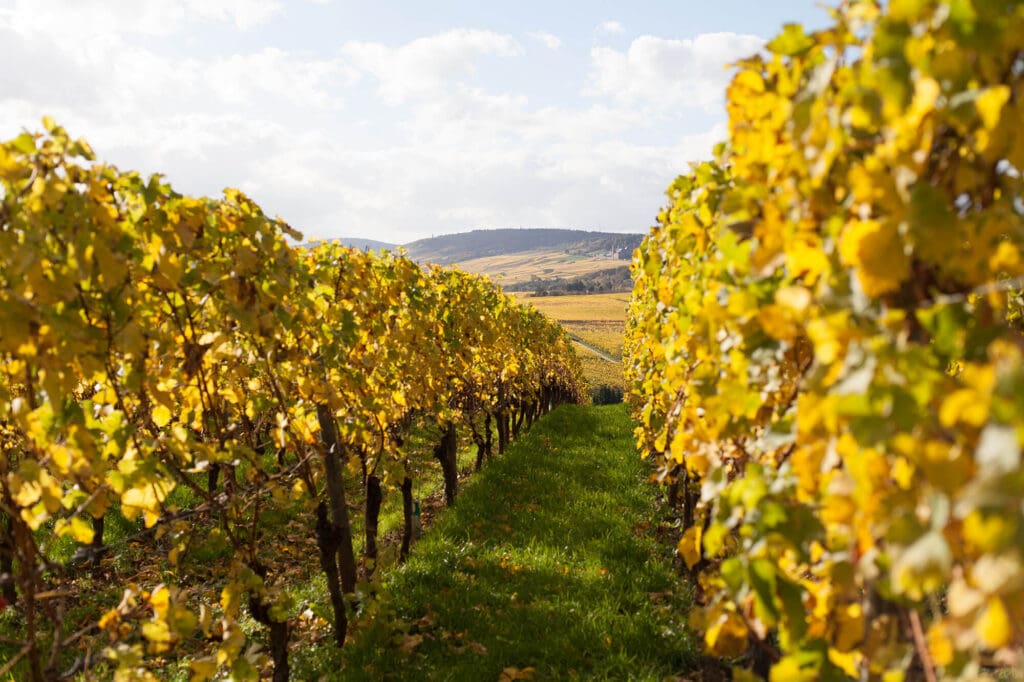
Rheinghau Wine Travel Region
A Vineyard With a Queen
One wine in particular continued to rise through my notes, Joachim Flick’s Königin Victoriaberg Dechantenruhe Riesling 2025 from Hochheim.
What I noticed first was the wine itself. Peach and citrus, a creamy middle palate, minerality and a freshness that carried everything rather beautifully.
Only afterward did I discover where it had taken me. Königin Victoriaberg follows the Main between Hochheim and Flörsheim, its south facing vineyard rooted in alluvial sediment over limestone. Queen Victoria and Prince Albert visited Hochheim in 1845 and were taken to taste wine in what was described as one of the village’s finest vineyards. Five years later, Victoria granted permission for the vineyard to bear her name. A monument to the Queen was unveiled there in 1854.
I love discoveries like this. I had chosen the wine in Wiesbaden entirely because of what happened in my glass, only to discover that it could lead me beside the Main and straight into a piece of nineteenth century history.
Wine really can be a passport.
Following My Palate Through Rheingau
Josef Spreitzer’s Oestricher Rosengarten gave me a beautiful marriage of acidity, texture, savory peach and citrus. At Hattenheim, Wisselbrunnen and Nussbrunnen both stood out, while Robert Weil’s Kiedricher Gräfenberg brought minerality, body, peach flesh and wonderful texture.
What became fascinating was that I was not simply responding to one soil type. My favorites crossed very different geological settings. The commonality was in my glass.
Again and again, I liked the way great Rheingau Riesling could bring tension and generosity together, with enough acidity and mineral energy to remain precise and enough fruit and texture to make me want another glass.
Mosel, Saar and Ruwer: Following the Slate
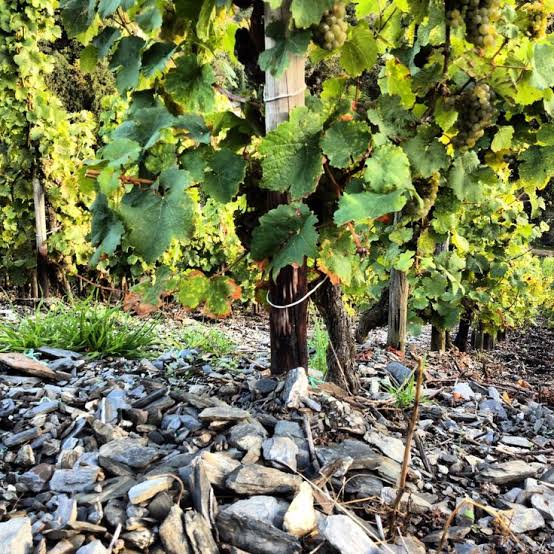
Wine Travel and Slate Vineyards Mosel Germany
Then the landscape changed. At the Mosel, slate becomes one of the great visual and geological signatures of German wine, climbing steeply above the twisting river and continuing into the Saar and Ruwer.
Yet my tasting notes made something very clear. Slate alone was not enough to win me over.
The Mosel Rieslings I loved most brought mineral freshness together with stone fruit, citrus and flesh. I repeatedly preferred wines that remained present through the middle of the palate rather than becoming overly austere or disappearing before the finish.
Dr. Loosen’s Bernkasteler Lay Riesling 2025 Fassprobe became one of my wines of the entire tasting. I found stone fruit on both the nose and palate, freshness and a lovely fleshy quality.
The vineyard itself rises sharply beside Bernkastel with gradients of 50 to 70 percent. Its soil is grey blue Devonian slate with some clay, and even its name carries the geology within it. The word Lay has Celtic origins and means slate rock.
Then came Reichsgraf von Kesselstatt’s Kaseler Nies’chen, where I loved the combination of fruit, citrus and stone without the wine becoming too harsh. The same producer surfaced again among my favorites with Scharzhofberger on the Saar.
That repetition interested me. The Mosel was no longer simply one region in my notebook. Through the wines, it began becoming a journey along three rivers, the Mosel, Saar and Ruwer, each telling its own story.
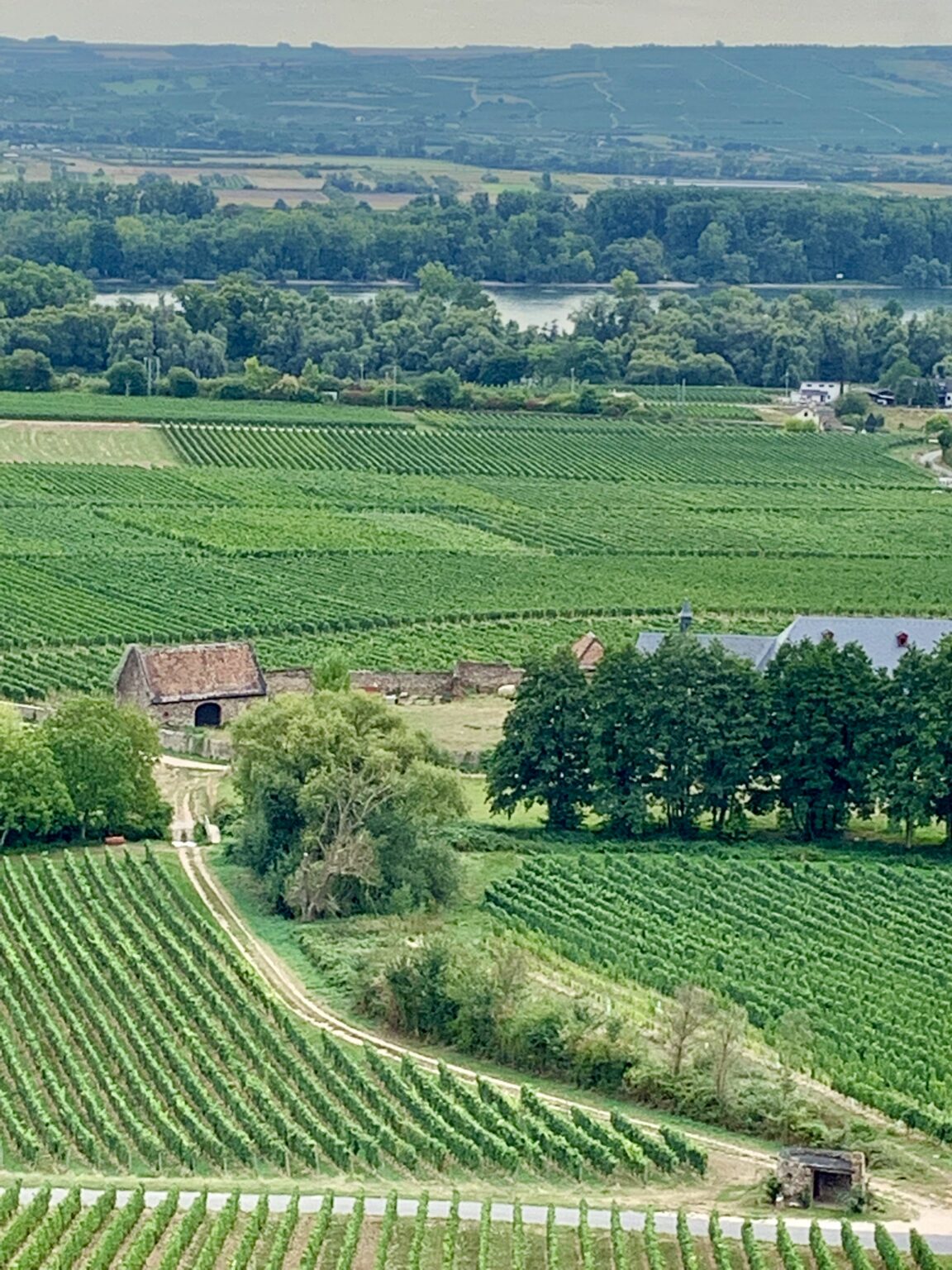
Wine Travel Scenic Vineyard Views in Germany
Nahe: When Geology Seemed to Change With Every Glass
I remembered liking the Nahe, and going back through my notes confirmed it.
Nahe caught my attention differently from the Rheingau or Mosel. Its extraordinary geological diversity became one of the most fascinating discoveries I made after the tasting, with volcanic formations, sandstone, limestone, slate and other soils appearing within a relatively compact wine region.
One of my most memorable wines was H. Dönnhoff’s Roxheimer Im Mühlenberg Riesling 2025.
My tasting note was immediate. Cool and mineral, with a finish that strongly reminded me of Chablis.
I was not suggesting that Riesling should taste like Chardonnay or that Nahe somehow resembles Burgundy. It was simply an instinctive sensory connection, that feeling of tension, stone and coolness certain wines can create.
Only later did I discover that Im Mühlenberg rises above Roxheim on slopes of 30 to 50 percent and is rooted in weathered red Rotliegend sandstone.
There was something wonderfully useful in that discovery. Minerality could not simply be assigned to slate. Once again, wine had made me curious enough to follow it back into the earth.
Pfalz: The Marathon
Then there was Pfalz.
Pfalz felt enormous while I was tasting, and there was good reason. With 23,640 hectares under vine in 2025, it is Germany’s second largest wine region. Its vineyards extend for around 85 kilometres through 130 wine villages from Bockenheim to Schweigen at the Alsace border. Pfalz also supplied the largest regional group at the 2026 Wiesbaden preview, with 110 wines.
This was the part of the tasting where concentration became part of the exercise. Flight followed flight, and then certain wines suddenly snapped everything back into focus.
In one Forst Riesling flight I wrote “best of bunch” beside the wine whose beautiful fruit and stone fruit broke through most clearly for me. The larger surprise came when Pfalz turned red.
At Schweigen, close to France, Jülg’s Sonnenberg RG Spätburgunder 2024 brought cherry and raspberry, more weight and an appealing savory quality. It became one of my favorite red wines of the preview and broadened the entire story.
Germany in Wiesbaden was never going to be only about Riesling.
When Germany Turned Red
The reds revealed another very clear part of my palate. I kept gravitating toward fruit clarity.
Sour cherry, ripe cherry, strawberry, raspberry and currant appeared repeatedly among my favorite Spätburgunders. I wanted enough acidity to keep those flavors alive, and I enjoyed smoke, earth, herbs or oak when they played supporting roles. When sulfur, reduction or wood began obscuring the fruit, I became much less interested. My notes were surprisingly consistent about it.
Kühling Gillot’s Oppenheimer Kreuz Spätburgunder 2024 was a beautiful example. Cherry and sour cherry led the wine, with a touch of earth underneath. Kreuz itself lies between Oppenheim and Dienheim on deep loess interspersed with limestone, with its geology classified as calcareous marl and loess.
The Ahr brought an entirely different landscape. Deutzerhof’s Eck Spätburgunder gave me sour cherry, strawberry and bright acidity.
Then, in Württemberg, something even more interesting happened.
Aldinger’s Fellbacher Lämmler Lemberger stopped me with tart black cherry and a wonderfully mouthwatering quality. Elsewhere in the tasting I also responded strongly to Spätburgunder from the same Lämmler vineyard.
Two producers. Two different grapes. The same place. That is the sort of repetition I pay attention to.
Lämmler rises near Fellbach outside Stuttgart, with south and southwest facing slopes and soils including weathered Keuper, sandstone and colored marl. Cooler evening air from the nearby Schurwald hills helps temper the warm vineyard position. Suddenly, Württemberg had moved onto my personal wine travel map.
Beyond Riesling and Spätburgunder
One reason I ultimately chose a Top 20 rather than a Top 10 was that I did not want the other grapes I enjoyed to disappear.
Riesling deservedly dominates my final ranking, but Wiesbaden reminded me how much more there is to German wine.
In Franken, Bürgerspital zum Hl. Geist Würzburger Stein Harfe Silvaner 2025 caught me with mineral freshness, green fruit and stone fruit.
Stein Harfe occupies a particularly warm section of Würzburg’s famous Stein vineyard. Its soil is Triassic shell limestone, and its wonderful name comes from the vineyard’s harp like shape, with the vine rows resembling the strings of the instrument.
There were Weißer Burgunders where almond, apricot, peach and creamy citrus appealed to me, Grauer Burgunder with stone fruit and texture, and a Baden Chardonnay whose ripe fruit and sweet tart tension made it one of my strongest non Riesling whites.
Then came Blaufränkisch, giving me blackberry, black cherry, pepper, acidity and more substantial tannin.
Burg Ravensburg’s Dicker Franz grows beneath Ravensburg Castle at Sulzfeld on gypsum Keuper soils. The vineyard takes its memorable name from Baron Franz Göler von Ravensburg, remembered in family history for his considerable appreciation of culinary pleasures. The site also has a long history with Blaufränkisch, more commonly called Lemberger in Germany.
What Wiesbaden Taught Me About My Own Palate
After enough glasses, a large comparative tasting begins revealing not only the wines, but the taster. Going back through my notes, texture may be the word that tells me the most about what I love. I like acidity, but I do not need austerity simply for austerity’s sake. In white wines, I repeatedly gravitated toward stone fruit, peach, citrus, minerality and enough flesh to carry the wine through the middle of the palate. I noticed when a wine became thin or flat. I noticed when bitterness lingered beyond where I wanted it.
With reds, beautiful fruit mattered. Sour cherry, strawberry and raspberry appeared again and again among my favorites. I wanted freshness and acidity around that fruit, with savory or earthy notes adding interest rather than covering it.
None of this was something I decided before arriving in Wiesbaden. Perhaps that was my favorite discovery of all.
I walked into the VDP preview with a tasting book and no preconceived Top 20. I tasted first and made my choices. Only afterward did I begin following those wines back through rivers and villages, into slate and limestone, red sandstone and loess, historic vineyards and royal visits. That is the journey I always hope a glass of wine will begin.
These are the twenty wines from Wiesbaden that I would most like to put back in my glass.
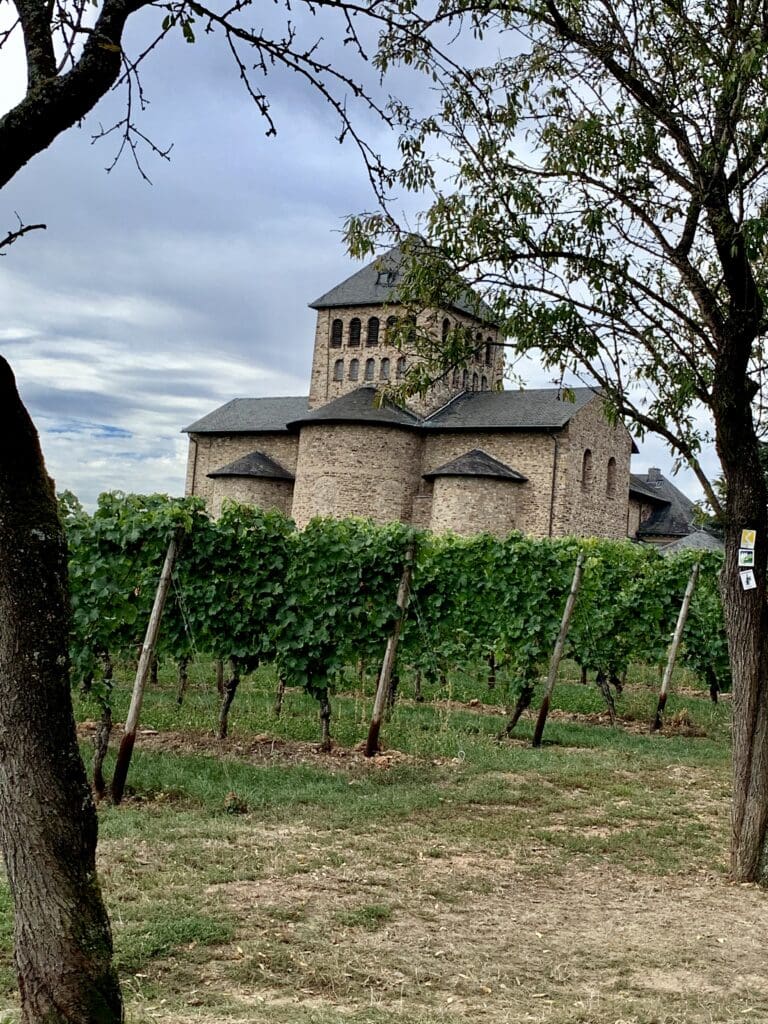
Wine Travel Germany, vineyards and Castles with Wine Travel Writer Jamie Knee
_______________________________________________________________________
Petite Wine Traveler’s Top 20 VDP.GROSSES GEWÄCHS Wines From the 2026 Wiesbaden Preview
A note about my rankings: This is my personal ranking from the wines I tasted in Wiesbaden and is not intended as a definitive ranking of every wine presented at the VDP preview. I kept private tasting scores throughout the event, but these selections represent the wines that made the strongest overall impression on my palate.
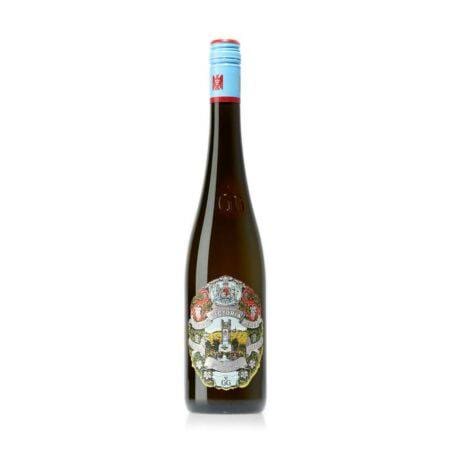
Joachim Flick Königin Victoriaberg Dechantenruhe Riesling
1. Joachim Flick Königin Victoriaberg Dechantenruhe Riesling 2025
Rheingau | Riesling
Creamy and beautifully composed through the middle of the palate, with peach, citrus and mineral freshness. The acidity carried the texture rather than dominating it. I loved this wine before discovering anything about its remarkable Hochheim vineyard or Queen Victoria connection, which somehow made finding the story afterward even better.
2. Dr. Loosen Bernkasteler Lay Riesling 2025 Fassprobe
Mosel | Riesling
Stone fruit, freshness and a wonderfully fleshy palate made this one of the wines I kept returning to in my notes. There is brightness and mineral energy, but also a satisfying middle. Its steep Bernkastel vineyard and Devonian slate give the wine an equally compelling sense of place.
3. Josef Spreitzer Oestricher Rosengarten Riesling 2025
Rheingau | Riesling
A beautiful combination of texture and acidity, with savory peach and citrus. This was one of the wines that helped define Rheingau for me in Wiesbaden, generous enough to invite another sip but with the freshness to keep everything finely drawn.
4. Reichsgraf von Kesselstatt Kaseler Nies’chen Riesling 2025
Mosel Saar Ruwer | Riesling
Stone, citrus and lovely fruit with mineral freshness, but importantly for me, without becoming hard or severe. The wine had enough flesh and generosity to balance its energy, exactly the kind of Riesling I found myself gravitating toward.
5. H. Dönnhoff Roxheimer Im Mühlenberg Riesling 2025
Nahe | Riesling
One of the most distinctive wines in my notebook. Its cool mineral sensation immediately took my mind to Chablis, an instinctive comparison that made me want to know far more about the vineyard. Discovering the red sandstone beneath Im Mühlenberg afterward only deepened my fascination.
6. Robert Weil Kiedricher Gräfenberg Riesling 2025
Rheingau | Riesling
Minerality and body met peach flesh and excellent texture, with a tart finish providing definition. There was substance here, but never heaviness, from one of Rheingau’s great vineyard sites.
7. Prinz Hattenheimer Nussbrunnen Riesling 2025
Rheingau | Riesling
Spice and stone fruit with a velvety creamy quality that made me write “gastronomy wine” beside it. I could immediately imagine this at the table, which is often one of the greatest compliments I can give a wine.
8. Josef Spreitzer Hattenheimer Wisselbrunnen Riesling 2025
Rheingau | Riesling
Texture, weight, acidity, creaminess and peach. Few tasting notes summarize my Rheingau preferences quite as neatly. Spreitzer appearing twice this high on my list was one of the producer patterns I noticed only after revisiting the tasting.
9. Reichsgraf von Kesselstatt Scharzhofberger Riesling 2025
Mosel Saar Ruwer | Riesling
Mineral, bright and fleshy, with tart green fruit. This was the second Kesselstatt wine to reach my first nine and helped underline how strongly I responded to these Rieslings across the Mosel, Saar and Ruwer landscape.
10. Kühling Gillot Oppenheimer Kreuz Spätburgunder 2024
Rheinhessen | Spätburgunder
Beautiful cherry on the nose followed by sour cherry on the palate and just enough earthiness underneath. Fruit remained at the center of the wine, one of the defining characteristics of the German Spätburgunders I liked most.
11. Jülg Schweigener Sonnenberg RG Spätburgunder 2024
Pfalz | Spätburgunder
Cherry and raspberry with more weight and an appealing savory quality. This was one of the wines that changed the direction of my Pfalz tasting and reminded me that some of my most memorable discoveries there would be red.
12. Blankenhorn Schliengener Sonnenstück Chardonnay 2023
Baden | Chardonnay
Ripe stone fruit and citrus with a lovely sweet tart tension. There was enough generosity to make it immediately appealing while freshness kept the wine moving. One of my favorite surprises outside Riesling.
13. Deutzerhof Ahrweiler Eck Spätburgunder 2024
Ahr | Spätburgunder
Sour cherry and strawberry with lovely acidity. Fresh, direct and beautifully fruit driven, exactly the combination I continually responded to in German Pinot Noir.
14. August Kesseler Rüdesheimer Berg Schlossberg Spätburgunder 2024
Rheingau | Spätburgunder
There was a little more smoke on the nose than I naturally prefer, but the elegant cherry and berry fruit underneath won me over. A wine that reminded me not to reduce my own preferences to rigid rules.
15. Kaufmann Hattenheimer Hassel Spätburgunder 2024
Rheingau | Spätburgunder
Delicious tart cherry and beautifully appealing fruit. I would have welcomed just a little more acidity, but the purity of the fruit kept pulling me back.
16. Aldinger Fellbacher Lämmler Lemberger 2024
Württemberg | Lemberger
Tart black cherry with a genuinely mouthwatering quality. This was one of the wines that made me stop and reconsider Württemberg, and one of the most enjoyable red wine surprises of the preview.
17. Graf Neipperg Neipperger Schlossberg Weißer Burgunder 2025
Württemberg | Weißer Burgunder
Light almond, peach, citrus and vanilla with lovely balance. It showed how attractive Weißer Burgunder can be when the texture is present but the wine retains brightness and lift.
18. Heitlinger Tiefenbacher Spiegelberg Grauer Burgunder 2024
Baden | Grauer Burgunder
Peach and apricot led into a creamy almond and stone fruit palate with a tart finish. The combination of fruit and texture gave it the substance I was looking for without losing freshness.
19. Bürgerspital zum Hl. Geist Würzburger Stein Harfe Silvaner 2025
Franken | Silvaner
Mineral and fresh, with green and stone fruit. Silvaner felt completely at home here, and discovering the shell limestone amphitheatre of Würzburger Stein afterward made me want to experience the vineyard itself.
20. Burg Ravensburg Sulzfelder Dicker Franz Blaufränkisch 2022
Baden | Blaufränkisch
Blackberry and black cherry, pepper, good acidity and more substantial tannins brought my list to a completely different finish. I liked that this wine felt unapologetically different from the elegant Spätburgunders around it, and its castle vineyard and wonderfully named Dicker Franz made the story even more memorable.
Where the Glass Takes Me Next
The beauty of a tasting like Wiesbaden is that it does not really end when the last glass is poured. My notebook is now filled with places I want to stand in for myself: the steep slate above the Mosel, the red sandstone of Nahe, Hattenheim’s vineyards looking toward the Rhine, the limestone of Franken and the slopes outside Stuttgart where Lemberger became one of my unexpected discoveries.
That, to me, is what great wine should do. It should leave us curious about what lies beyond the bottle.
These twenty wines are not an attempt to hand down an absolute verdict. They are discoveries from my palate, made over several concentrated days of tasting in Wiesbaden. Wine remains wonderfully personal, and I would not want it any other way.
My hope is that this list gives you twenty wines to seek out, twenty vineyards to remember and perhaps a few new places in Germany to put on your own wine travel map.
Because sometimes wine gives us a flavor, sometimes it gives us a story, and the very best glasses make us want to go somewhere. That is Wine as a Passport. Wine As A Passport

Wine Travel Writer Jamie Knee, exploring German Wine Country
About Jamie Knee
Jamie Knee is a luxury wine travel writer, international wine judge, global wine presenter, contributing writer for Decanter, Forbes Travel Guide Speaker and founder of Petite Wine Traveler. Her work explores wine regions, luxury hospitality, enotourism and the connection between wine, culture and place through her signature Wine as a Passport approach.